

I help people to have emotional intelligence with hypnotherapy. It works quickly to help you stabilise your out-of-control emotions. You may even get health fund rebates.
Are your emotions out of control?
Do you get easily upset all of a sudden?
Are other people complaining about you overreacting to ordinary situations?
Did you know hypnotherapy can be the fastest way to gain control?
As a clinical naturopath (ANPA) I also screen for any possible physical reasons that may be contributing to your loss of control. As clinical psychotherapist and registered mental health professional (PACFA) we look at what your thoughts are doing and how they need to change.
You can get help quickly and comfortably and effectively. As a hypnotherapist (AHA), I’m trained to deal with these very problems.
Why do you need emotions?
We’re all hard wired for emotion in more than one part of our brains. Emotions help us make fast decisions, even before we’ve had time to think about a situation.
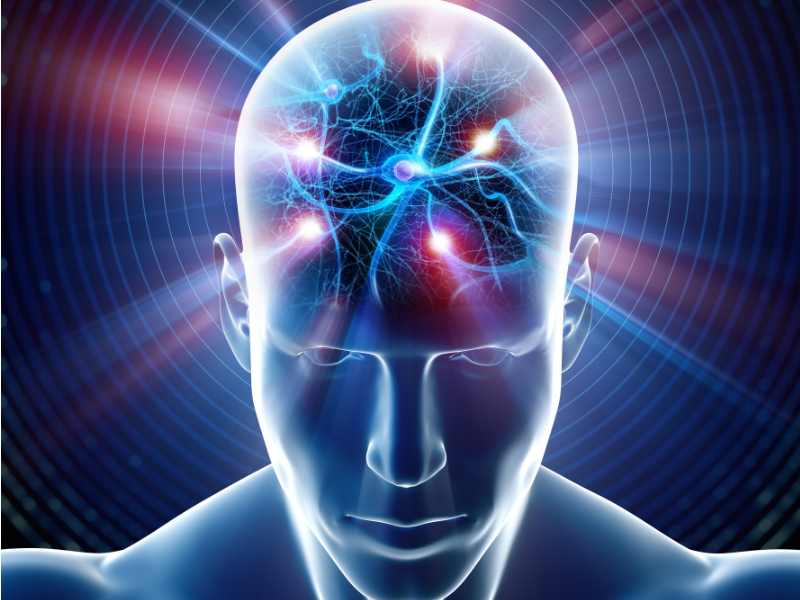
There are several parts of the brain including the amygdala, basal ganglia cingulate cortex, prefrontal cortex and hippocampus that work together to produce emotional reactions (1).
You’re born with a preset configuration like crying as baby to get food or feeling love when you become attached to someone. These are survival emotions that you need as a human being.
There are also learned emotions that you learn to automatically produce to a situation. These are dependent on what experiences you’ve been exposed to in the past.


When emotional programming goes right
You may have had parents who spent a lot of time teaching you to have control over your innate emotions and learned emotions. Perhaps they’d been taught to do that themselves.
Maybe you had teachers or carers who specifically made the effort to include these skills in your education. Some schools run emotional intelligence courses (2).
Psychology is now recognising that teaching emotional intelligence to children early produces better academic results, mental health and social skills.
What’s also more recognised now is that mental health programs and treatments that also teach emotional intelligence produce better clinical outcomes.
When emotional programming goes wrong
Some people may have neurological conditions such as ADHD, autism, Asperger’s, bipolar disorder or schizophrenia which interferes with their ability to control their pre-programmed emotions (3).
You may have conditions like diabetes, PCOS, liver or kidney dysfunction, chemical and heavy metal poisoning, nutrition deficiencies and MTHFR gene variations. These can cause uncontrollable emotional responses. The problem is that psychiatry and general medicine often don’t check for these and instead make a misdiagnosis of mental illness.
Your learned experience programming can also cross-wire your brain, so it overreacts to ordinary situations. Perhaps you had a parent or partner with little emotional control who you’ve been unconsciously copying.
Previous trauma in childhood or later in life can set up the amygdala so it becomes over-reactive, sending you uncontrollably into the fear and defensive response. When that happens it interferes with your ability to think things through logically.

Image: Model only.
Loss of emotional control
Not having control over your emotions can lead to anxiety, constant fear, depression, paranoia, outbreaks of temper tantrums, delusions, anger, self-destructive behaviour and suicidal thoughts (4). It can also give rise to you attacking other people without real provocation.
In some people loss of emotional control is a feature of their mental illness. In most people, however, it’s not an illness but simply that you never learnt to control your emotions.
That loss of emotional control can put you and others in danger. You don’t have control of your logical thinking brain so can make poor decisions.
If you go through your life with poor control of your emotions, it’s going to be a very bumpy journey. Many people will see you as immature at the least and even psychotic.
Why you need control over your emotions
As human beings we experience a whole raft of emotions that are perfectly natural. Those emotions inform us of so many things (5).
You need to pay attention to those emotions, work out what they’re trying to tell you, and make logical decisions about what to do next. Those logical decisions must be balanced with all the knowledge you have and your observations of the circumstances in which you find yourself.
Emotions come before logic. They’re a signal for us to give something further careful consideration. You’re not meant to go directly from emotions to action because emotions can’t make logical deductions.
If you go from the emotions directly to the action, you don’t have all the facts. If you act, only or mainly, on your emotion you’re likely to constantly make the wrong decisions.
Emotional training
If you have good control over your emotions, your parents and carers probably put in thousands of hours teaching you to perform those skills (6).
Many parents and carers, however, don’t know how to do this. My own parents had extraordinarily little emotional intelligence, so they were unable to teach it to me.
In these cases, you need to seek help from a professional who can teach you how to gain control over your out-of-control emotions. I teach you to listen to your emotions but also pay attention to make good rational, logical decisions and find additional information.
It’s a process of learning and rehearsing emotional control skills to become automatic. It’s no different from learning to walk, read, count or drive.
Emotional control hypnotherapy
Remember I talked about the different parts of the brain involved in emotional control? Also, there are a whole host of hormones and neurotransmitters involved too.
What also contributes to your emotional state is your mindset, automatic reactions, and behaviour patterns.
As a hypnotherapist, I use hypnosis to help you balance and reinvent those configurations fast. Hypnosis can not only block emotional panic but can also increase emotional control and wellbeing.
Hypnosis can help control your physical body and the way your mind works. Also, hypnosis can be a very pleasant, enjoyable and relaxing experience.
About Dr Tracie O’Keefe DCH
Dr Tracie O’Keefe DCH, BSc, ND, is one of the most highly qualified and experienced clinical hypnotherapists, psychotherapists, counsellors and mental health professionals practising in Australia today. She has received worldwide recognition and praise for her research, development of clinical procedures and teaching. She is the author of nine books and hundreds of articles and papers.
Call our central booking for your FREE telephone consultation with Dr Tracie O’Keefe DCH. Phone 0403 398 808
References
(1) Phan, K. L., Wager, T., Taylor, S. F., & Liberzon, I. (2002). Functional neuroanatomy of emotion: a meta-analysis of emotion activation studies in PET and fMRI. Neuroimage, 16(2):331–48. doi:10.1006/nimg.2002.1087
(2) Charmizo-Nieto, M., Arrivillaga, C., Rey, L., & Extremera, N. (2021). The Role of Emotional Intelligence, the Teacher-Student Relationship, and Flourishing on Academic Performance in Adolescents: A Moderated Mediation Study. https://doi.org/10.3389/fpsyg.2021.695067
(3) Chapman, H., Visser, K., Mittal, V., Gibb, B., Coles, M., & Strauss, G. (2019. February 11). Emotion regulation across the psychosis continuum. Cambridge University Press. https://www.cambridge.org/core/journals/development-and-psychopathology/article/abs/emotion-regulation-across-the-psychosis-continuum/BDB447AA563A5E3A1657F8475262E21D
(4) Bradley, B., DeFife, J., Guarnaccia, C., Phifer, J., Fani. N., Ressler, K., & Western, D. (2015) Emotion Dysregulation and Negative Affect: Association With Psychiatric Symptoms. J Clin Psychiatry, 72(5): 685–691. https://www.ncbi.nlm.nih.gov/pmc/articles/PMC4605672/
(5) Tyng, C., Amin, H., Saad, M., & Malik, A. (2017, August 4). The Influences of Emotion on Learning and Memory. Frontiers in Psychology. https://doi.org/10.3389/fpsyg.2017.01454
(6) Sánchez-Núñez, M., García-Rubio, N., Pablo Fernández-Berrocal, P., & Latorre, J. (2020). Emotional Intelligence and Mental Health in the Family: The Influence of Emotional Intelligence Perceived by Parents and Children. Int J Environ Res Public Health, 17(17): 6255. https://doi.org/10.3390/ijerph17176255


